
Edward Dutton And Alcohol
A Short Scroll

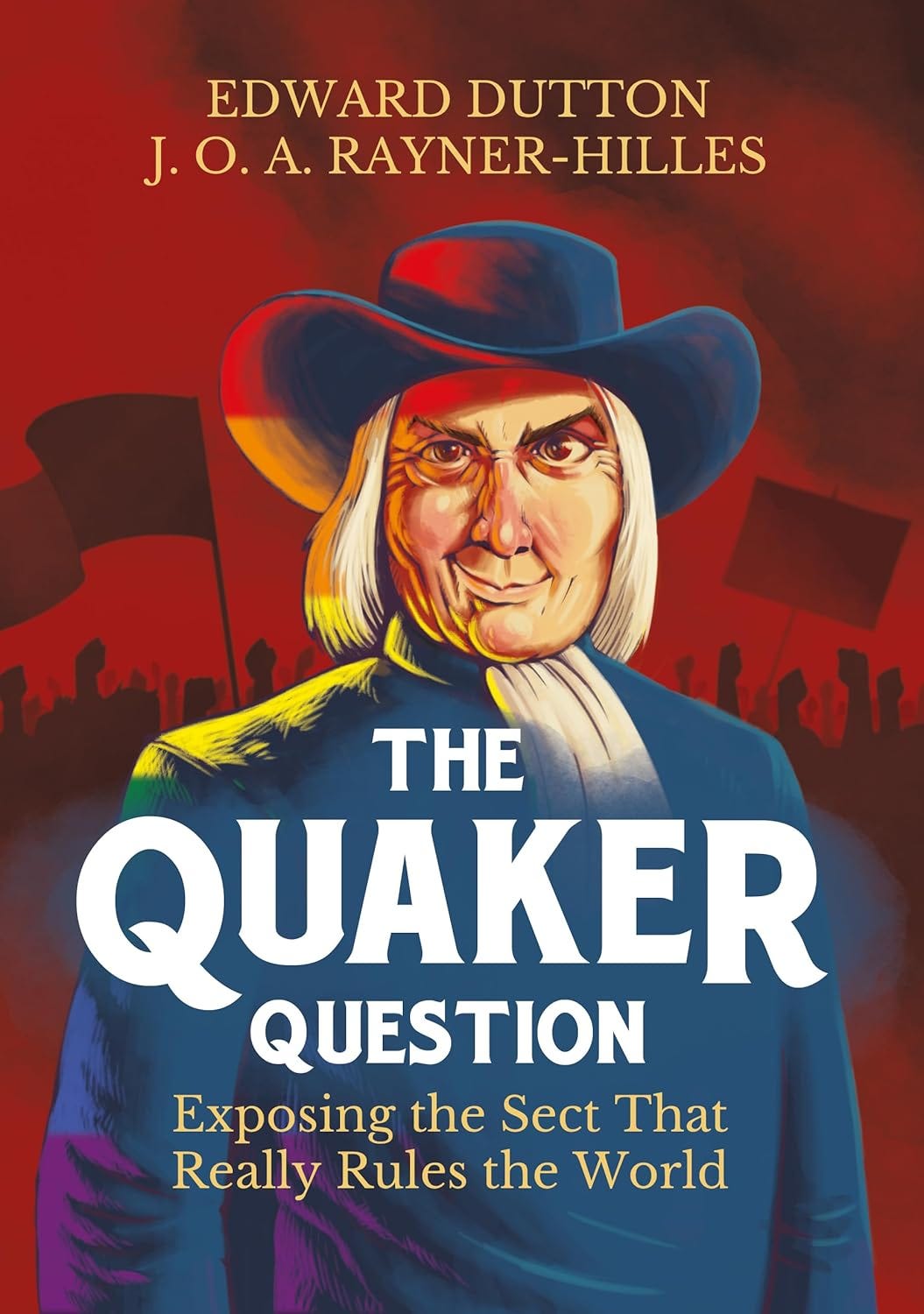
In The Quaker Question: Exposing the Sect That Really Rules the World, Edward Dutton and J.O.A Rayner Hills investigate the influence of this group on society and compare Quaker traits to those of contemporary leftists. In what is an informative and amusing work, the following interesting observation is made on alcohol and English society: ‘In England, by drinking with your friends in a pub you are signalling your membership of the community, you are reinforcing ties with the ancestors and with England’s history by engaging in the same social rituals that the ancestors did, and you are, in that sense, dissolving into the English as a loyal member of the tribe.’
While the role of social drinking in facilitating communal bonds is axiomatic, its capacity to reinforce ancestral ties is probably considered less. The setting of the pub allows the English to drink in the same places that our forebears did, as many of our establishments are hundreds of years old. Old architectural forms, imagery, and references to past historical figures, events, and customs inform a sense of continuity with our ancestors.
The writers claim that the consumption of alcohol, rather than just the fact of ritualistic drinks with friends, is all-important in ‘fostering a cooperative, high-trust society,’; they argue a refusal to drink alcohol and prefer water is ‘offensive.’ Alcohol can help people relax and get into a positive social spirit, but drinking it is not necessarily essential for the purpose. I know some people who attend pubs and refrain from alcohol without being any less a part of the social experience. This is an important point because there is an idiocy that some display when asking people to account for why they might prefer to have a soft drink, as if it were their business what you consume. A decision to abstain could be made for a number of reasons; one could have an important engagement the next day, just not fancy alcohol there and then, or need to manage their alcohol intake due to having a number of engagements in a given week. While alcohol can definitely help people to bond and be good for creating group cohesiveness, those who drink all the time might damage their health, and in doing so, undermine the fitness of the collective.
Although the fanaticism on this point can be a bit disturbing, and there are haughty teetotallers who criticise people for enjoying a drink, the example the authors provide of a founding Quaker, George Fox (1624-1691), shunning a drinking game does not squarely fall into this category. Fox’s cousin and his cousin’s friend invited him to get drunk at a fair in Atherstone, Warwickshire. They made getting drunk and toasts into a game where the first person to stop drinking beer because of being too drunk has to pay for what was consumed. Fox refuses to participate, slams money on a table, and storms off. Dutton states that this was performative, and he could be right, but it might also have been sincere. In any case, the lark is a stupid one. While Fox’s reaction seemed over the top, there was nothing wrong with his rejection of the invite.
The book makes reference to Quaker temperance undertaken ‘to promote a virtuous alternative to alcohol,’ and notes the influence of this sect in the trade of sweets and chocolate by Joseph Fry (1728-1787), John Cadbury (1801-1889), and Henry Rowntree (1838-1883). The latter two established philanthropic model villages, and the authors suggest these charitable developments had a sinister motive that were not without costs if you were a non-Quaker. Alcohol was rejected, behaviour of residents was strictly monitored, there was isolation from the joys of the towns, and expectations to participate in Quaker events. Employees ‘lived in a kind of Quaker commune’. Even if Quaker demands were excessive or extreme, they were by no means the only religious sect to impose harsh restrictions on those who came under their sway. And although the book highlights some significant ways in which Quaker influence has been negative, their hypocritical attacks on hierarchy while tending to institute their own order being an example, their endeavours in the cause of sweets and chocolates should not count as marks against them. The authors make passing reference to committed Mormons, who also reject alcohol and meet for dessert. Perhaps some lessons can be learnt from what can seem like strange religious sects if we make sure to oppose their overbearing and overzealous sides.
While there is so much to love about the pub and alcohol, and enjoyment of the same can be conducive to strengthening community and forming bonds, there is no reason why alternatives cannot serve a like function. The elegant tearooms up and down the country are fine choices, and maybe we could do with more of them or something similar to the Tory and Whig coffee houses of centuries past. In the absence of community centres that cater specifically to the English, a wider variety of places we can call ours would be welcome.